

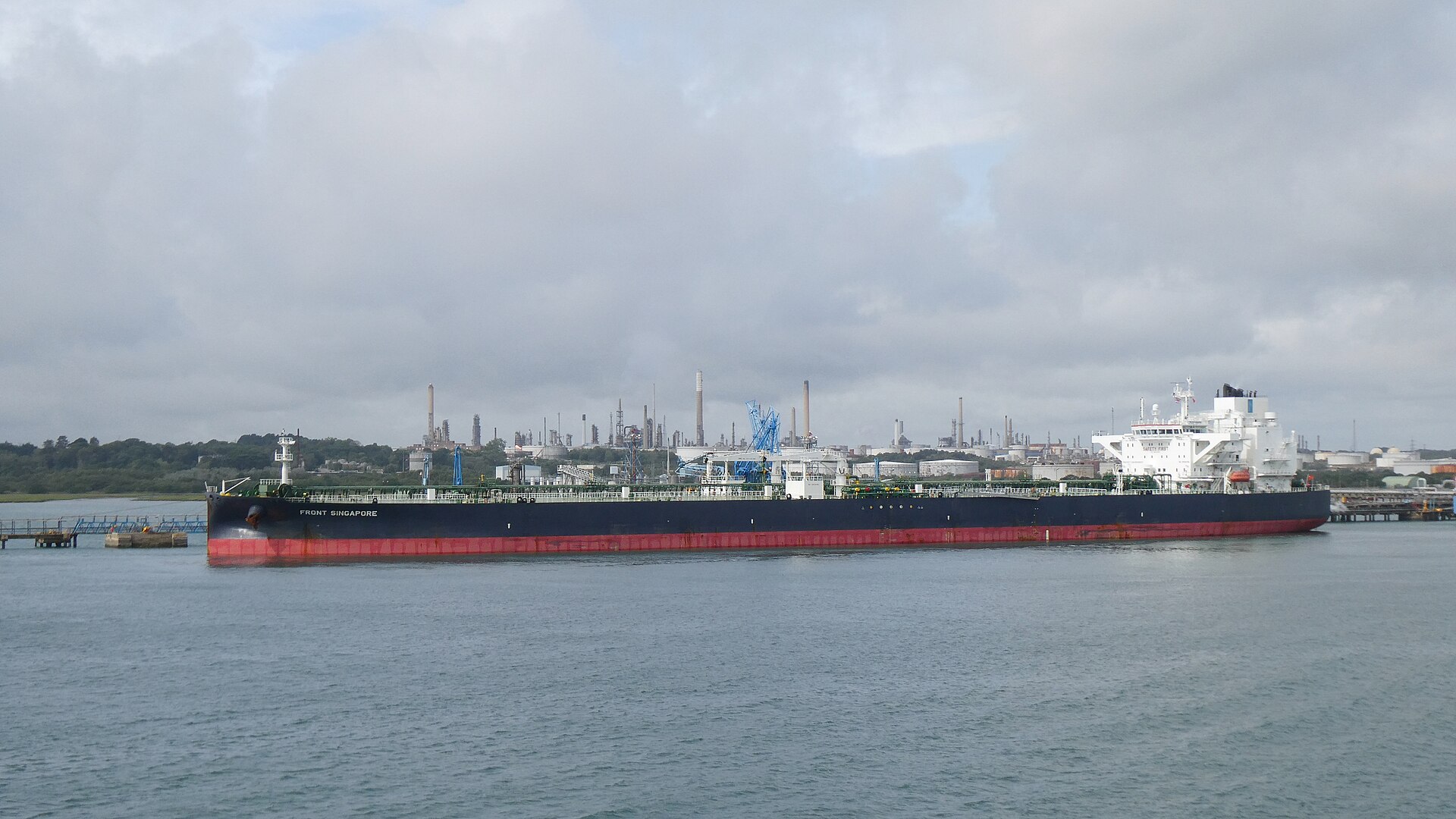
By the narrowest and most important measure — barrels shipped — the Gulf has weathered eight months of war better than almost anyone predicted. According to ship-tracking firm Kpler, oil shipments through the Strait of Hormuz and along alternative routes averaged more than 24 million barrels a day in the week ending 18 October, above the pre-war level of roughly 23.3 million. The resilience is real. So is the damage underneath it.
Oil Shipments That Refuse to Fall
When the war began on 28 February, energy analysts modelled catastrophe: a closed strait, spiking prices and shortages. Instead, producers rerouted, drew on bypass pipelines, repaired damage quickly and kept loading. Air defences performed strongly — the UAE reported intercepting 132 of 137 ballistic missiles fired at it on the war’s first day, and analysts estimated interception rates above 90 per cent across the theatre in the war’s early phase.
The result is a strange equilibrium in which the world’s most contested waterway is also, by volume, functioning. Tankers sail, contracts are honoured, and the global economy has absorbed a regional war with far less disruption than the opening weeks threatened.
The Bill Beneath the Surface
Resilience, however, is not the same as immunity. A Reuters investigation documented at least 135 Iranian drone and missile attacks on at least 84 infrastructure sites across seven Gulf states since the war began. Iranian-linked strikes damaged five of Saudi Arabia’s nine largest refineries and both export manifolds at Fujairah, the UAE terminal outside Hormuz. At Qatar’s Ras Laffan, the world’s largest LNG complex, strikes took out two liquefaction trains representing about 17 per cent of Qatar’s export capacity; QatarEnergy expects repairs to take three to five years and cost an estimated $20 billion a year in revenue.
As the analysis of the Gulf’s readiness argues, the system’s spare capacity — its ability to absorb the next shock — is thinner than the headline volumes suggest. Bypass routes are already degraded, repair queues are long, and a renewed campaign would strike infrastructure that has not yet been fixed from the last one.
Diplomacy Is Now an Energy Policy
This is why the mediation efforts running through Doha matter to oil markets as much as to generals, a connection visible in efforts to broker calm across the region. Every week of quiet lets repair crews work and inventories rebuild; every escalation headline tightens the margin. QatarEnergy’s deal this month to buy up to four million tonnes a year of US LNG also hints at how producers are hedging a future in which Gulf supply carries a permanent risk premium.
For importing nations, the lesson of 2026 is double-edged. The market proved tougher than feared — and the region’s energy system proved more fragile than the export figures show. Both things are true, and policy built on only one of them will be wrong.
The Gulf’s oil keeps flowing, and that fact deserves its headline. But flows are a lagging indicator: they measure what producers managed yesterday, not what they could survive tomorrow. The region’s energy resilience is genuine, hard-won and finite — which is another way of saying the diplomacy cannot wait.
