

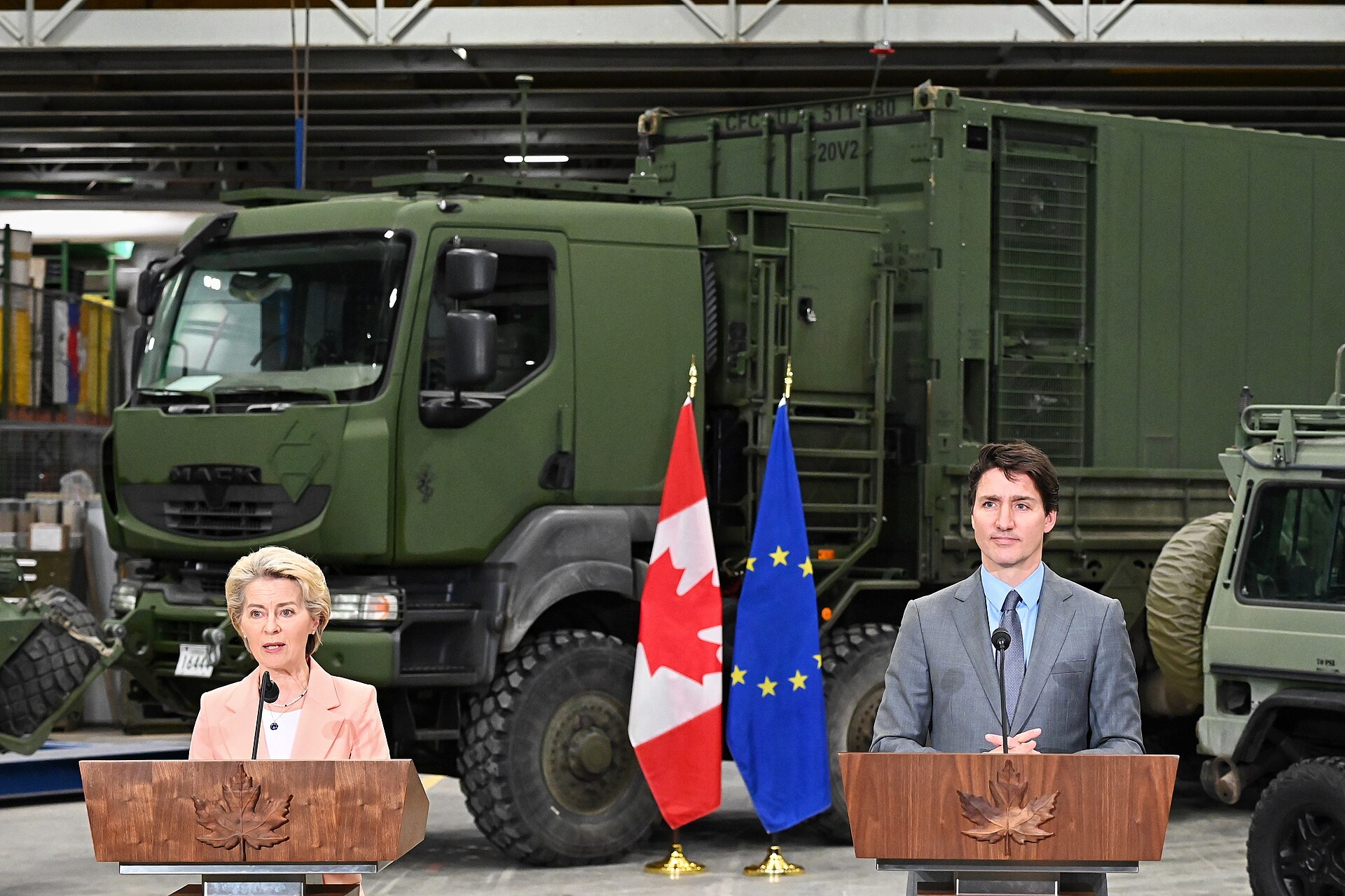
Canada and the European Union have announced a new strategic alliance, launched in Montreal, that is explicitly open to other like-minded countries. The partnership ties Canada into European efforts on trade, critical minerals and support for Ukraine, and it is being read as a deliberate hedge against growing trade pressure from the United States.
What the Alliance Actually Covers
The headline commitments include Canadian participation in a 90 billion euro Ukraine support loan and closer cooperation on critical minerals and artificial intelligence. For Ottawa, the minerals angle is central: Canada holds large reserves of the lithium, cobalt and rare earths that European industry needs to cut its dependence on Chinese supply chains.
For Brussels, the deal widens the circle of reliable partners at a moment when transatlantic relations are strained. Our our politics coverage has tracked how European governments have been building alternative partnerships across trade and security over the past year.
An Open Door, Deliberately Left Ajar
The phrase like-minded countries does a lot of work in the announcement. It signals that the alliance is not a closed bilateral arrangement but a framework others could join, with countries such as the United Kingdom, Japan and Australia the obvious candidates in diplomatic speculation.
Officials were careful to avoid framing the move as anti-American, but the timing tells its own story. As today international politics digest reports, the launch came a day before the alliance partners restated their positions on Ukraine funding and trade rules in terms that contrast sharply with Washington current approach.
Business groups on both sides of the Atlantic welcomed the announcement, particularly in mining and clean technology, where European demand and Canadian supply are natural complements. The hard part will be regulatory: aligning standards for critical mineral processing, carbon accounting and AI governance is slow technical work that rarely makes summit headlines, but it is where alliances like this either become real supply chains or remain press releases with flags behind them.
Why It Matters Beyond the Photo Call
Strategic partnerships are easy to announce and harder to make real. The test of this one will be whether the minerals cooperation produces actual processing capacity, whether the Ukraine loan disburses on schedule, and whether the AI workstream leads to shared standards rather than shared communiques.
Still, the direction of travel is significant. Middle powers are increasingly building overlapping networks with each other instead of waiting for Washington or Beijing to set the terms, and this alliance is one of the clearest examples yet.
Expect the coming months to show whether other countries take up the open invitation. If they do, the Montreal announcement may be remembered as the start of a broader realignment in how democratic economies organise trade and security.
