

Every family has a number: the cost of the weekly shop they measure everything against. For years it barely moved. Now it anchors a new reality — the trolley that once rang up at £85 settles closer to £100, and shoppers feel the difference in a way headline statistics never quite capture. Inflation may have cooled, but prices, as every checkout queue knows, did not come back down.
What the Numbers Say
Official figures from the Office for National Statistics tell a two-part story. The rate of food price rises has slowed dramatically from the peaks of the early 2020s, when annual food inflation ran into double digits. But a slower rise is still a rise, and it compounds on top of an already higher base. Economists at the Bank of England describe this as the difference between inflation and the price level — the first can fall while the second stays painfully high.
Staples lead the squeeze: bread, dairy, eggs, cooking oil and meat have all seen cumulative increases far above general inflation across the past five years. For households where food is a large share of spending — and for large families most of all — the effective inflation rate remains well above the national average.
Why the Basket Costs More
Costs travelled down the chain
Energy prices during the crisis years raised costs at every step: fertiliser, farming, processing, refrigeration and transport. Those costs were passed to shelves with a lag, and producers rebuilt margins where they could. Supermarket competition caps the worst of it, but cannot repeal arithmetic.
Shrinkflation quietly continues
Some of the rise hides in plain sight: packages that shrink while prices hold. Consumer groups now track “shrinkflation” as a category of its own, and shoppers increasingly read grams and litres the way investors read charts — a habit our readers know well from following price movements in our market analysis coverage.
How Families Are Fighting Back
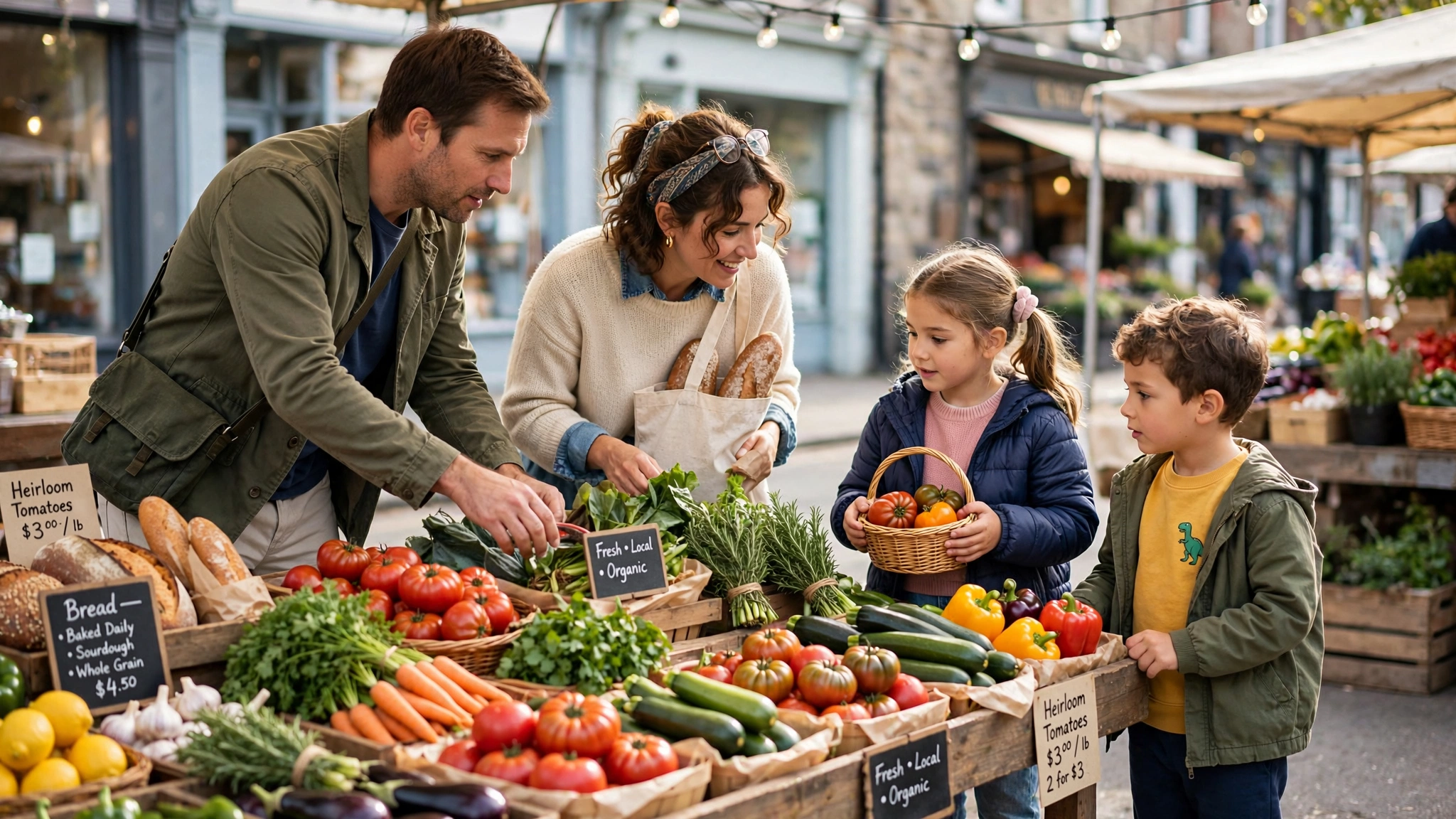
The adaptations are now well established. Own-brand ranges have shed their old stigma and win blind taste tests in magazine surveys. Shopping is split deliberately: a discounter for staples, a market or butcher for fresh goods, a supermarket only for the rest. Batch cooking and freezer discipline have returned to the mainstream, and yellow-sticker hours have their own regulars who plan around them.
Community responses matter too. Food-sharing apps, community fridges and the volunteering networks described in our community support coverage now form part of the weekly-shop ecosystem for thousands of households — reducing waste and cost at the same time.
The Outlook
Forecasters expect food inflation to hover near general inflation through 2026, which means stability of a sort: no relief, but no fresh shock either. For families, the new prices are simply the prices — and the skills honed in the squeeze years, from list discipline to label reading, have become permanent household economics. The weekly shop will not return to £85. The families adapting best are the ones who stopped expecting it to, and rebuilt their habits around the world as it is.
