

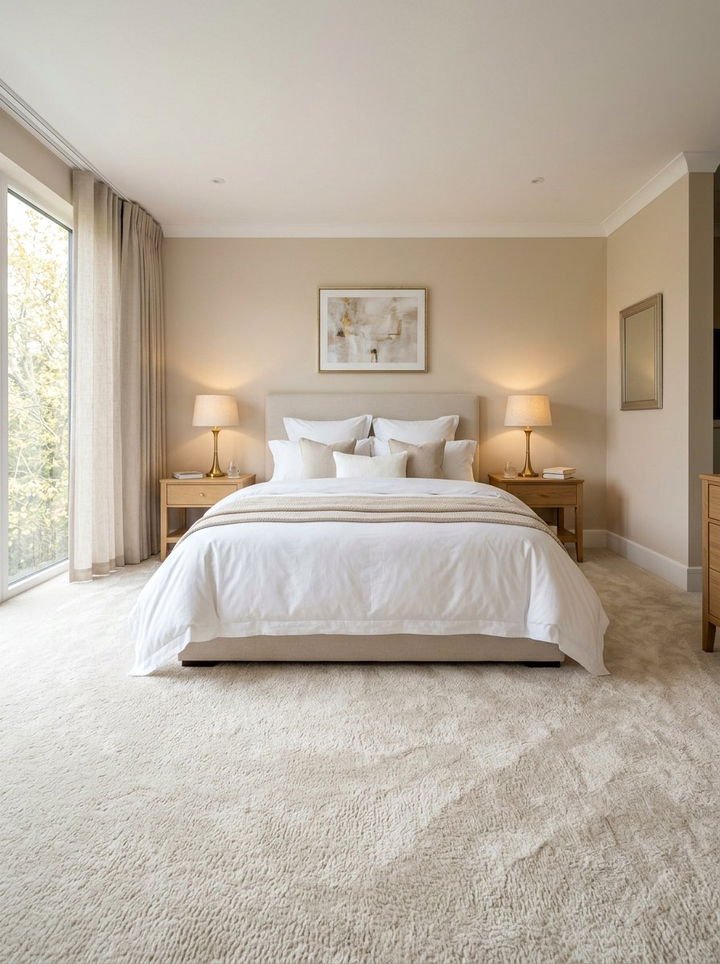
There is a particular kind of comfort that only a soft floor can give a bedroom. The first step out of bed on a cold morning sets the tone for the whole day, and a well-chosen Bedroom carpet turns that moment from a small shock into a gentle welcome. Beyond warmth underfoot, carpet changes how a room sounds, how it holds heat, and how calm it feels when the door closes at night.
Bedrooms are the one space in the home where comfort should outrank almost everything else. Hard floors look smart in living areas and hallways, but in a sleeping space they can feel stark and echoing. Carpet softens footsteps, muffles the small noises of the night, and creates the hushed atmosphere that helps the body and mind slow down before sleep.
Warmth you can feel and warmth you can measure
Carpet is a natural insulator. The fibres trap still air, and that trapped air resists the movement of heat far better than a bare tile or timber surface. In air-conditioned homes the benefit works in reverse during summer: the floor stays pleasantly neutral instead of conducting the chill of a slab straight to your feet. Many households notice that a carpeted bedroom simply feels a degree or two more comfortable at the same thermostat setting.
The underlay beneath the carpet matters just as much as the carpet itself. A quality cushioned underlay adds another insulating layer, improves the softness of every step, and extends the life of the pile by absorbing impact. When you are comparing options, ask about underlay thickness and density rather than treating it as an afterthought, because it quietly shapes both warmth and durability.
A quieter room for deeper sleep
Noise travels easily through hard surfaces. A dropped phone, a closing drawer, or footsteps from an early riser can carry across a tiled bedroom and wake a light sleeper. Carpet absorbs a large share of that impact sound, and it also softens noise arriving from the room below or the corridor outside. For shift workers, parents of young children, and anyone who shares a home, that acoustic softness is a genuine quality-of-life upgrade.
Choosing a pile that suits the way you live
Pile choice is where comfort becomes personal. A deep saxony or plush pile feels luxurious and is wonderful in a main bedroom used mainly for sleeping and dressing. A shorter twist pile keeps its good looks longer in a busy family bedroom and resists the flattened paths that form between the door and the bed. Loop piles are hard-wearing but less yielding, so many people reserve them for guest rooms that see lighter use.
Fibre matters too. Wool offers natural resilience, warmth, and a softness that synthetic fibres imitate with increasing success. Modern nylon and polyester carpets bring excellent stain resistance, which helps in children's rooms, while wool blends try to give you the best of both worlds. There is no single right answer, only the right balance for your household, your budget, and how much maintenance you are willing to do.
Colour, light, and the feeling of space
A bedroom carpet covers a large share of the visible floor, so its colour quietly steers the whole palette of the room. Pale, warm neutrals make a small bedroom feel larger and calmer, and they pair easily with changing bedding and curtains. Deeper tones such as charcoal, navy, or warm taupe create a cocooning effect that many people love in a main suite, especially with soft layered lighting in the evening.
Whatever shade you settle on, order samples and live with them for a few days before deciding. A Bedroom carpet that looks perfect under showroom lights can read quite differently beside your own walls at dawn and dusk. Check the sample against your bed linen, your wardrobe doors, and any rug you plan to layer on top, and view it in both daylight and lamplight before you commit.
Simple care that keeps the comfort lasting
Carpet asks for regular but undemanding care. Vacuum twice a week in a lived-in bedroom to lift dust before it settles deep into the pile, and deal with spills promptly by blotting rather than rubbing. A professional deep clean once a year or so refreshes the fibres and helps the floor keep its softness. Rotate light furniture occasionally so the pile is not compressed in exactly the same spots for years.
Safety and comfort for every age
There is also a practical safety argument that families appreciate. A carpeted floor is forgiving when toddlers topple, kinder for older relatives who are less steady on their feet, and far less slippery for socks and slippers than polished tile. In children's bedrooms it doubles as a play surface, warm enough for sitting on the floor with books and toys through the winter. These small daily mercies rarely appear in showroom brochures, yet they are the things owners mention most often when they describe why they would never go back to a hard floor in the bedroom.
In the end, the bedroom is where the day begins and ends, and the floor is the surface you touch first and last. Choosing carpet for that room is a decision about warmth, quiet, and ease rather than fashion alone. Take your time, test samples properly, invest in good underlay, and the result will reward you every single morning.
