

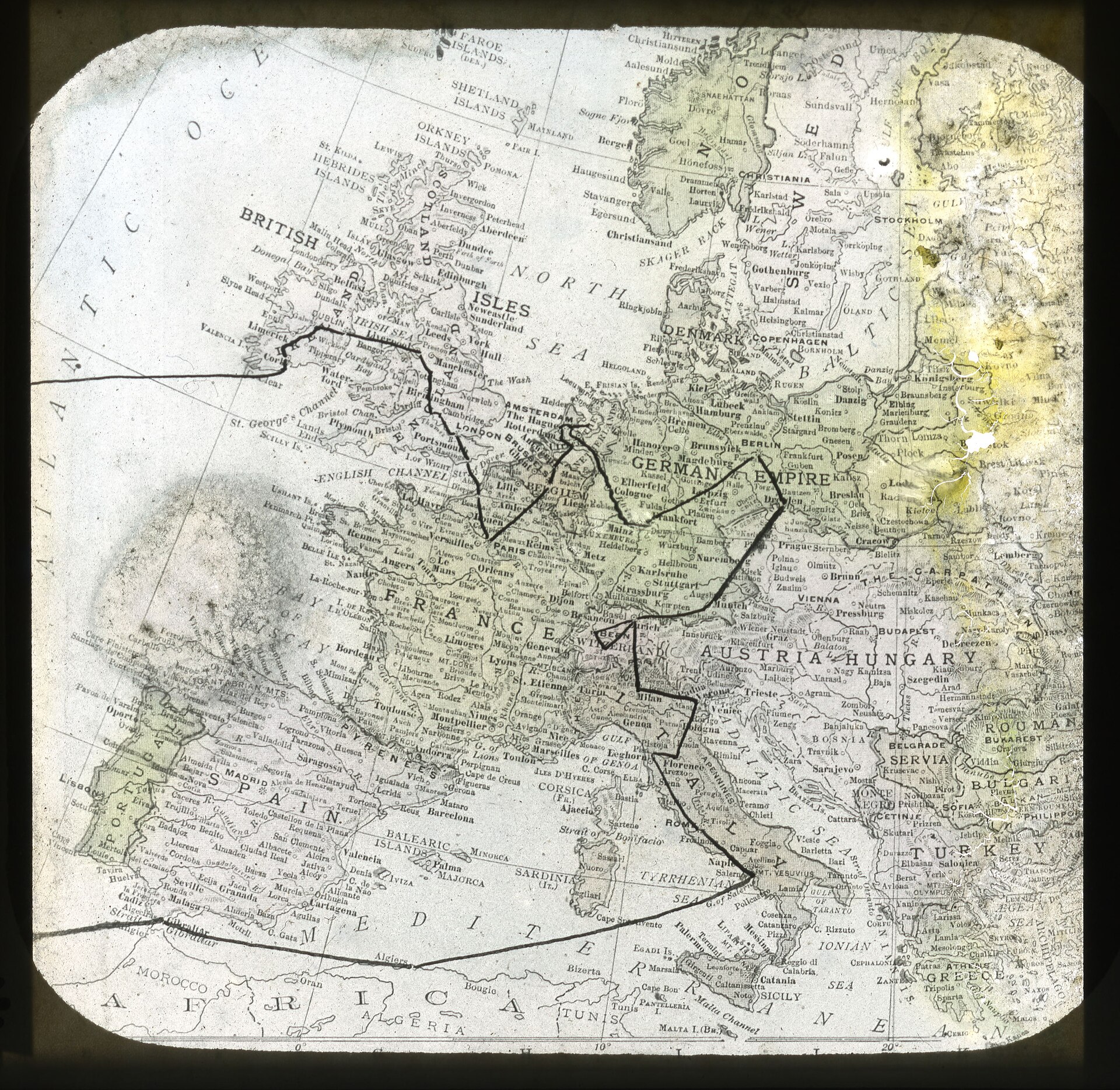
The single-destination holiday is losing its monopoly. Omio’s third annual NowNext Travel Report, produced with YouGov from a survey of 8,505 adults across six countries, identifies the travel trends shaping 2026-2027: multi-stop itineraries, planning that accounts for extreme heat, and journeys organised around personal passions. Demand itself is not the story — 49 per cent of Americans say they want to travel more often, up from 34 per cent in 2025. The story is how differently they intend to do it.
Pick-and-Mix Travel
The report’s signature trend is the multi-stop holiday: travellers chaining destinations together within one trip, hopping by train to another city or by ferry to an island rather than basing themselves in a single resort. Some 52 per cent of Americans plan or seriously consider such a trip, against 48 per cent across all surveyed markets, and 73 per cent of Americans expect to travel domestically.
The shift suits rail-and-ferry booking platforms, obviously, but it also reflects a traveller who treats the journey as part of the holiday’s content. Ground transport has an advantage planes cannot copy: the view. As cities invest in the kind of everyday infrastructure that makes arrival pleasant — safer, greener public spaces among them — the stopover city becomes a destination in its own right rather than a corridor.
Travel Trends: Heat, Cost and the Planning Checklist
Climate has entered the itinerary. The report finds travellers increasingly planning around extreme heat — choosing shoulder seasons, cooler regions and flexible bookings that can bend when the weather cannot. Disruption is now a standard planning input: 68 per cent of Americans consider it when planning, though that is below the 75 per cent global average.
Money remains the other great organiser. Some 76 per cent of respondents expect to take at least one action to manage travel costs, led by hunting for better deals and flexible plans (36 per cent). The traveller of 2027, in the report’s portrait, is neither carefree nor cautious — they are simply deliberate, and willing to spend where the spending is personal.
Passions Over Landmarks
The third strand is the rise of the passion-led trip: journeys built around an interest — a team, a cuisine, a craft, a landscape — rather than a famous skyline. Americans show a stronger willingness than other markets to spend on personal passions, and a third now find returning to familiar places more appealing than they did a few years ago, suggesting depth is competing with novelty.
As the full findings of the NowNext report describe, these trends compound one another: multi-stop routes make passion stops possible, heat-awareness reshapes when they happen, and cost discipline decides which ones survive. The travel industry that serves this customer sells flexibility and access, not packages and certainties.
Trend reports are easy to mock and hard to ignore, because the booking data behind them eventually shows up in timetables and hotel pipelines. On this evidence, the holiday of 2027 is longer in planning, lighter in luggage and built like a playlist — several stops, one theme, and the weather consulted before the tickets are bought.
