

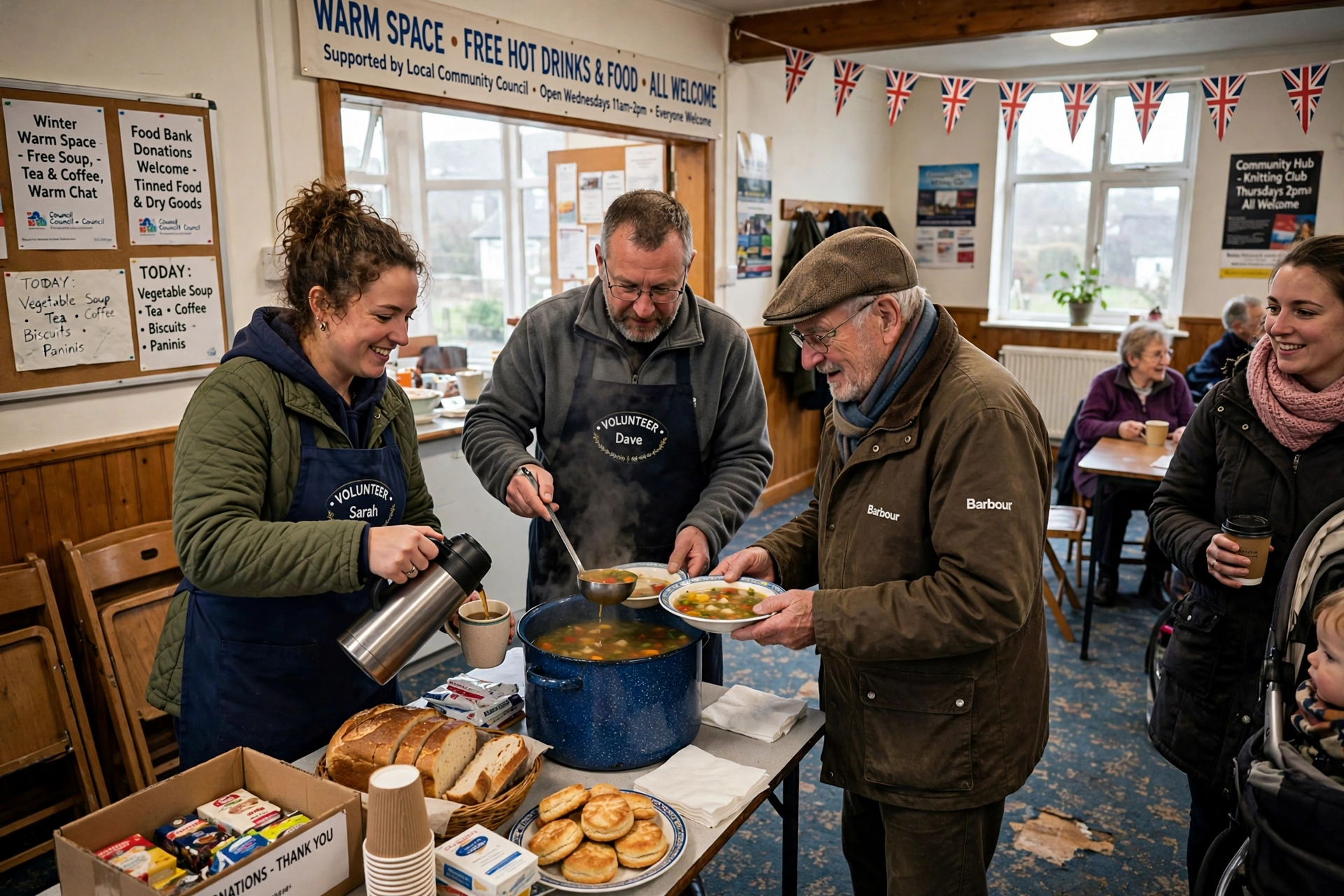
As temperatures fall and energy bills rise again, community organisations across Britain are quietly expanding one of the most practical responses to the cost-of-living squeeze: warm spaces. Libraries, places of worship, community centres and charities are opening their doors for longer hours this winter, offering residents a heated place to sit, a hot drink, and in many cases a free or low-cost meal.
A Network That Grew Out of Necessity
Warm spaces first appeared in large numbers during the energy price crisis of 2022, when councils and charities realised that some households were choosing between heating and eating. What began as an emergency measure has since become a settled part of the winter landscape. Many venues now run year-round community programmes, with the warm-space offer simply intensifying in the colder months. National coverage by the BBC has followed how these hubs evolved from crisis response into permanent neighbourhood fixtures.
Organisers say the visitors are more diverse than stereotypes suggest: pensioners in cold homes, parents working from laptops to save on heating, students, and people who simply want company. Loneliness, several coordinators note, is as powerful a draw as warmth.
More Than a Heated Room
The most successful spaces offer far more than radiators. Advice workers help visitors check they are receiving every benefit they are entitled to; debt and energy advisers run drop-in sessions; some venues host homework clubs, language conversation groups and digital skills help for people applying for jobs online. Guidance from Citizens Advice is frequently available on site, helping residents tackle energy debt, tariffs and grants before problems escalate.
Food is central to many programmes. Community fridges redistribute surplus supermarket stock, lunch clubs serve hot meals for a pound or two, and cooking classes teach how to make filling dishes cheaply in slow cookers and air fryers, which cost far less to run than ovens.
Volunteers Are the Engine
Almost all of this runs on volunteers. Retired teachers staff homework clubs, local businesses donate food and printing, and faith communities of every background provide halls, kitchens and people. Coordinators stress that this cooperation across neighbourhoods and traditions is one of the movement’s quiet achievements: a shared practical response that asks nothing of visitors except that they turn up.
Funding remains the main worry. Small grants from councils, energy-company hardship funds and local fundraising keep most venues going, but heating a hall all day is not cheap, and organisers are already planning for demand to grow if the winter turns severe.
Health Benefits Beyond the Heating Bill
Health professionals have welcomed the expansion for reasons that go beyond warmth. Cold, damp homes are linked to respiratory illness, worsened heart conditions and falls among older people, and general practitioners in several areas now actively signpost patients to warm spaces as part of social prescribing. Nurses who run blood-pressure checks at some venues say the informal setting reaches people who rarely visit a surgery. For new parents, the spaces double as a lifeline: somewhere warm to feed a baby, meet other parents and escape the isolation that winter can bring. In that sense, the halls are quietly functioning as preventive healthcare, catching problems early and connecting residents with support long before a crisis lands them in an emergency department.
Finding Help Locally
Residents can usually find their nearest warm space through their council’s website, local library or community centre noticeboards, and national directories list thousands of venues. Organisers are keen to remove any sense of stigma: these are community living rooms, open to everyone, whether you come for the warmth, the wifi, the lunch or the conversation.
Britain’s warm spaces will not solve the cost-of-living crisis on their own. But as winter approaches, they stand as evidence of something worth recording: when times get hard, neighbourhoods still know how to look after their own.
