

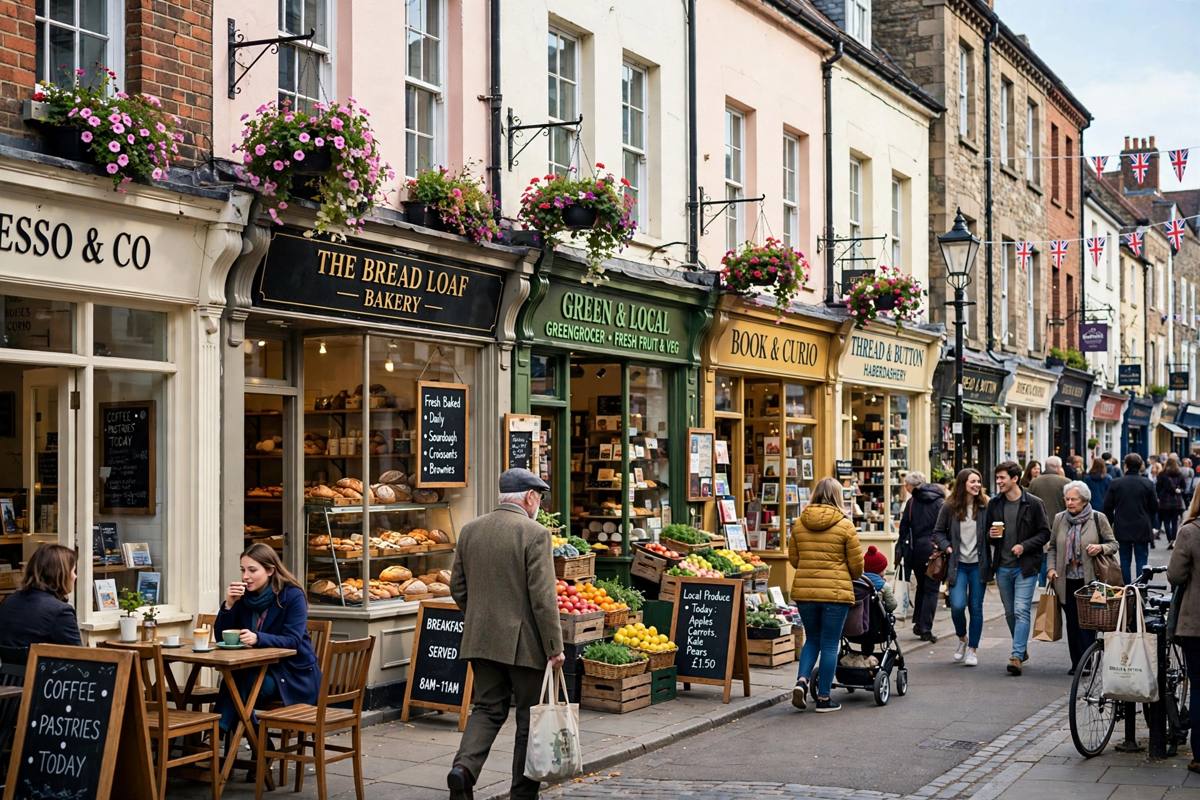
After years of boarded-up shops and gloomy headlines, many British high streets are showing unexpected signs of life. Independent cafés, bakeries, repair shops and small grocers are moving into units once dominated by national chains, and footfall figures in a number of towns have begun to climb again.
The revival is not uniform — some centres continue to struggle — but local leaders say a pattern is emerging. Streets that mix essential services with places to meet, eat and linger are performing best, while purely retail rows dependent on a single anchor store remain fragile. Read more in our business section.
Independents Lead the Way
Estate agents report that smaller, flexible units are letting quickly in many towns, often to first-time business owners. Lower rents compared with a decade ago, shorter leases and pop-up schemes run by councils have reduced the risk of starting out. Community-owned shops and social enterprises have also filled gaps left when banks and chain stores withdrew.
Shoppers, meanwhile, say they value what independents offer: personal service, local knowledge and money that stays in the area. Surveys by small-business groups repeatedly find that consumers want to support local traders, provided prices and opening hours remain realistic.
Services You Cannot Buy Online
A striking feature of the recovery is the growth of services that cannot be delivered by a parcel van: hairdressers, cafés, gyms, clinics, tailors and repair cafés where volunteers fix anything from toasters to bicycles. These businesses give people a reason to visit in person — and while they are there, they spend in neighbouring shops too.
Town-centre managers say events matter as well. Markets, street festivals and seasonal celebrations organised with local community groups have become key tools for drawing visitors back. Coverage of the wider economic picture at the BBC business desk notes that hospitality and leisure now anchor many centres that retail alone no longer can.
Challenges Are Far From Over
Traders are quick to list the obstacles that remain: high energy bills, business rates, parking costs and competition from online giants with none of those burdens. Many say the margin for error is thin, and a single bad season can undo years of work.
Policy responses are being tested across the country — from simplified planning rules for converting empty units, to funds for shop-front improvements and public-realm upgrades. Business organisations argue that lasting change needs consistent treatment of rates and a level playing field on tax between physical and online sellers.
A Different Kind of High Street
Few expect the high street of the past to return. The emerging model is smaller, more local and more mixed: fewer chain branches, more independents; fewer goods-only shops, more food, health, repair and community space.
For residents, the shift is visible in daily life — a new bakery queue on Saturday morning, a once-empty unit lit up as a workshop, a market square busy again. After a decade of decline stories, Britain’s high streets are writing a more complicated chapter: not a boom, but in many places, a genuine and hard-won revival.
