

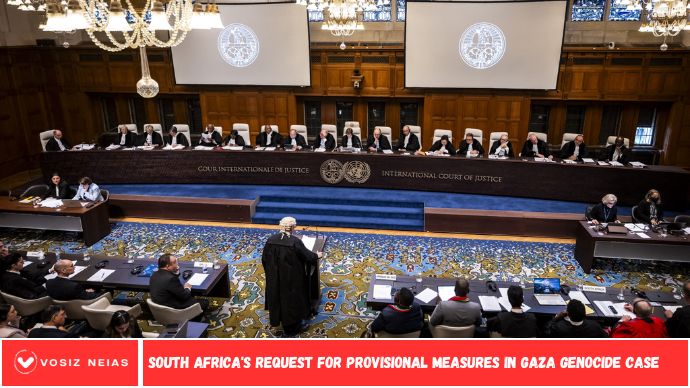
South Africa has formally requested the International Court of Justice (ICJ) to modify and strengthen existing provisional measures against Israel. This request comes in response to escalating civilian suffering in Gaza. The article explores the legal basis, the ICJ’s response, and the implications for international law and humanitarian protection.
Introduction: A Nation Appeals to International Law
In May 2024, South Africa returned to the International Court of Justice with a new request: to modify and reinforce existing provisional measures previously ordered against Israel. South Africa argued that worsening conditions in Gaza—marked by mass displacement, famine, and increasing civilian deaths—justified urgent international intervention. This article explains the motivation behind the request, the Court’s response, and what this legal development means for the broader international community.
Understanding Provisional Measures: Legal Protection in Emergencies
What Are Provisional Measures?
Provisional measures are emergency, legally binding orders issued by the ICJ to prevent irreparable harm to rights involved in a case while final proceedings are ongoing. They act like legal stopgaps—meant to protect lives, preserve evidence, or prevent escalation during trial.
South Africa initially requested provisional measures in early 2024, arguing Israel’s actions in Gaza could amount to genocide. The ICJ partially accepted this and issued a set of protective conditions.
Why South Africa Returned to the ICJ
1. Worsening Conditions on the Ground
According to South Africa’s latest submission, the humanitarian situation in Gaza has drastically deteriorated. The submission notes:
- Widespread famine affecting tens of thousands.
- Civilian casualties rising in southern Gaza, especially Rafah.
- Collapse of infrastructure, including hospitals and water systems.
South Africa argued these changes represent new facts that meet the ICJ’s criteria for modifying previous measures.
2. Alleged Non-Compliance by Israel
South Africa also accused Israel of failing to fully implement the original ICJ orders. The Court had previously directed Israel to:
- Prevent genocidal acts.
- Allow humanitarian aid into Gaza.
- Punish incitement to genocide.
South Africa claimed ongoing military operations in southern Gaza, particularly in Rafah, were in direct violation of these obligations.
The ICJ’s Updated Ruling
On May 24, 2024, the International Court of Justice issued a new set of provisional measures. The Court:
- Ordered Israel to halt military operations in Rafah, citing immediate risks to the Palestinian population.
- Reinforced the obligation to enable humanitarian aid access and prevent further civilian harm.
- Requested a follow-up report from Israel within one month, detailing how it is complying with these directives.
These measures were adopted by a majority of the Court’s judges and are legally binding under international law, though enforcement relies heavily on political and diplomatic pressure.
Implications for International Law and Diplomacy
Strengthening the Role of the ICJ
The case reinforces the ICJ’s role as a key player in global accountability, especially in armed conflicts involving civilian populations. It also underlines how non-western nations, like South Africa, can use international legal forums to influence world affairs.
Pressure on Compliance and Enforcement
While ICJ orders carry legal weight, there is no direct enforcement mechanism. This creates a challenge: how to ensure compliance when a state disagrees with or ignores the ruling.
Still, these decisions can influence international opinion, shape policy responses, and create grounds for further diplomatic or economic actions.
Conclusion
South Africa’s request to the ICJ represents more than just a legal filing—it’s a statement of principle and a call to action. As Gaza faces one of the worst humanitarian crises in decades, international law is being tested in real time. Whether the new provisional measures will be honored or ignored may shape not only the fate of civilians in Gaza but the credibility of the world’s legal institutions moving forward.
FAQs
1. What are provisional measures?
They are emergency legal orders from the ICJ to protect rights during an ongoing case, often used in conflict or human rights disputes.
2. Why did South Africa return to the ICJ?
To request additional protections for civilians in Gaza due to worsening humanitarian conditions and alleged violations of earlier orders.
3. What did the ICJ order Israel to do?
To stop military operations in Rafah, allow humanitarian access, and report on compliance within a month.
4. Are ICJ rulings legally binding?
Yes, but enforcement depends on international cooperation and political pressure, as the Court lacks a direct enforcement mechanism.
5. How does this impact Israel?
It increases international scrutiny and could influence diplomatic relations, sanctions, or further legal actions depending on compliance.
6. What does this mean for Gaza?
If implemented, the measures could improve humanitarian conditions and reduce civilian harm. However, effectiveness depends on real-world enforcement.
