

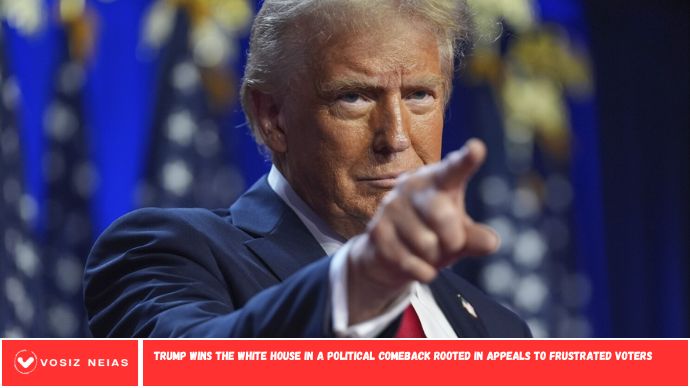
“I am your warrior. I am your justice.” With these words, Donald Trump encapsulated his 2024 presidential campaign, resonating deeply with voters disillusioned by economic instability, rising crime, and perceived governmental overreach. His victory not only marked a personal political comeback but also highlighted a significant shift in the American electorate’s sentiments.
Can a twice-impeached, felony-convicted former president make a successful return to the White House? Donald Trump just proved it’s possible. In a historic political reversal, Trump has been elected the 47th president of the United States, marking a dramatic comeback fueled by widespread voter dissatisfaction, economic anxieties, and sharp partisan divides. Just four years after refusing to concede defeat and facing intense legal scrutiny, Trump’s victory signals a profound shift in the American political landscape. This article explores how he reclaimed power, what fueled his support, and what lies ahead for the country as he prepares to retake office.
A Historic Return to Power
- First Former President to Return: Trump became the first former U.S. president since Grover Cleveland to regain the White House, underscoring the unprecedented nature of his comeback.
- Legal and Age Milestones: At 78, Trump became the oldest person elected to the presidency and the first convicted felon to hold the office.
- Vice Presidential Choice: Ohio Senator JD Vance, at 40, was selected as vice president, representing a generational shift in leadership.
Campaign Strategy: Amplifying Voter Frustrations
Trump’s campaign capitalized on widespread frustrations:
- Economic Concerns: Highlighting issues like inflation and job insecurity, Trump positioned himself as a defender of the working class.
- Crime and Immigration: He emphasized fears over rising crime rates and illegal immigration, portraying Democrats as ineffective in addressing these concerns.
- Global Instability: Referencing conflicts in the Middle East and Russia’s invasion of Ukraine, Trump painted a picture of a chaotic world under Democratic leadership.
The Role of Rhetoric and Messaging
Trump’s communication style played a pivotal role:
- Direct Appeal: His rhetoric directly addressed the fears and anger of his base, contrasting sharply with his opponent’s messages.
- Media Strategy: Utilizing social media and rallies, Trump maintained a constant presence, keeping his messages at the forefront of public discourse.
Global Implications of Trump’s Victory
Trump’s return to power has resonated beyond U.S. borders:
- International Reactions: Leaders worldwide are recalibrating their strategies in response to Trump’s foreign policy stances.
- Impact on Allies: U.S. allies are reassessing their positions, considering the implications of Trump’s “America First” approach on global partnerships.
Conclusion
Donald Trump’s 2024 election victory signifies more than a personal political comeback; it reflects a profound shift in the American electorate’s priorities and concerns. His ability to channel voter frustrations into a compelling narrative underscores the evolving dynamics of U.S. politics.
FAQs
1. What factors contributed to Trump’s 2024 victory?
Economic concerns, fears over crime and immigration, and dissatisfaction with the Democratic leadership played significant roles.
2. How did Trump’s rhetoric influence his campaign?
His direct and often provocative language resonated with voters seeking a strong, decisive leader.
3. What historical milestones did Trump’s victory achieve?
Trump became the oldest person elected president and the first convicted felon to hold the office.
4. How has Trump’s victory impacted global politics?
His “America First” policies are prompting international leaders to reassess their diplomatic strategies.
5. What challenges does Trump face in his second term?
Navigating a polarized political landscape and addressing the expectations of his diverse voter base will be key challenges.
6. How did the Democratic Party respond to Trump’s victory?
The Democratic Party is undergoing internal evaluations to understand the factors leading to their loss and to strategize for future elections.
