

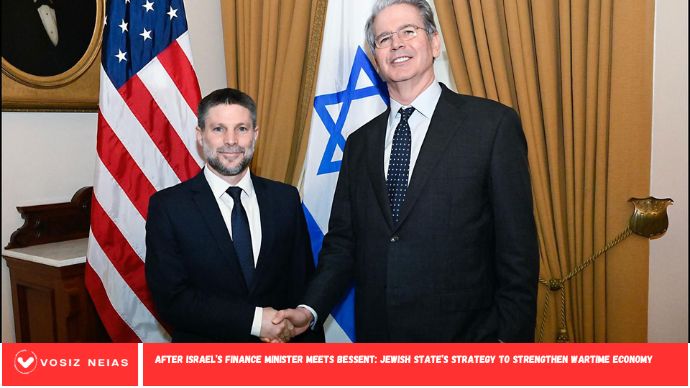
Israel’s Finance Minister’s recent meeting with Bessent signals a new economic approach aimed at bolstering the country’s wartime resilience. As the Jewish state faces prolonged conflict, the government is focused on strategic financial reforms, technological innovation, and international partnerships to safeguard economic stability. This article explores the key initiatives that will shape Israel’s economy in times of war and uncertainty.
Introduction:
In a world where global conflicts increasingly disrupt national economies, how can a nation remain financially resilient in the face of war? Israel’s recent efforts to boost its wartime economy reflect a critical shift in policy. Following Finance Minister Bezalel Smotrich’s meeting with Bessent, Israel is positioning itself to weather economic storms while strengthening its strategic economic assets. In this article, we will explore Israel’s plans to safeguard its economy and ensure long-term stability even amidst adversity.
Understanding Israel’s Wartime Economic Strategy
Israel, as a country frequently dealing with security concerns, faces unique challenges in maintaining economic stability during wartime. The economic pressure of mobilizing military forces, managing civilian life, and maintaining public services during a conflict can cripple a nation’s finances. To address this, Israel is launching initiatives aimed at fortifying its economic backbone.
- Strategic Financial Partnerships: In the wake of the meeting between Israel’s Finance Minister and Bessent, Israel is focusing on strengthening international financial partnerships to ensure a steady flow of foreign aid and investment. These partnerships will not only buffer the country’s fiscal position but also enhance its global economic standing.
- Innovation and Technology as Pillars of Economic Resilience: Israel is renowned for its high-tech industry, and during times of conflict, the government is increasing investments in this sector. From cyber-defense technologies to innovative agricultural solutions, these industries can offer both financial returns and security advantages. In fact, Israel’s technology exports reached $15 billion in 2023, a testament to the resilience of this sector.
- Fiscal Discipline and Government Spending Efficiency: To keep the economy balanced, Israel’s finance ministry is ensuring that public funds are spent efficiently. Streamlining government operations and reducing unnecessary expenses will help sustain military operations and essential services during extended periods of conflict.
Key Steps Israel is Taking to Boost Wartime Economic Resilience
1. Expansion of Global Economic Alliances
Israel is forging stronger ties with international organizations and financial institutions. By diversifying its sources of financial support, the country aims to reduce its reliance on a single market, especially during times of conflict.
2. Increased Investment in Technology and Defense
By prioritizing cutting-edge technologies like AI, robotics, and cybersecurity, Israel not only maintains its military edge but also ensures that these innovations drive economic growth. The country’s defense budget has been steadily increasing, with a projected 2025 defense budget of $26 billion.
3. Promoting Local Innovation
Israeli startups, particularly those in cyber defense, healthcare, and agriculture, are crucial for economic independence during wartime. The government is focusing on providing grants and tax incentives to bolster domestic innovation and reduce dependence on foreign imports.
4. Strengthening Energy Security
In light of global energy uncertainty, Israel is focusing on energy independence through the expansion of renewable energy projects and its natural gas exports. The Tamar and Leviathan fields, major gas reserves off Israel’s coast, are crucial for the nation’s energy strategy.
5. Strengthening Internal Reserves
Israel’s National Insurance Institute and fiscal reserves will be fortified to ensure financial aid can be distributed quickly during wartime. These reserves serve as a safety net for citizens and businesses affected by conflict.
6. Streamlining Military Spending
By focusing on efficiency and avoiding unnecessary expenditures, Israel’s military budget is aimed at ensuring that funds are allocated precisely where needed, without straining the national budget.
Statistical Insights Into Israel’s Economic Outlook
- Defense Budget Growth: Israel’s defense spending has increased by 7.2% annually, reflecting the country’s commitment to security and technological advancements.
- Tech Export Growth: The high-tech sector continues to be a driver of Israel’s economy, with tech exports surging by 10% from 2022 to 2023.
- Unemployment Rate: Even during conflict, Israel’s unemployment rate remained at a low 3.5% in 2023, showcasing the resilience of the economy.
These figures underscore Israel’s ability to maintain economic stability despite the challenges posed by ongoing geopolitical tensions.
Conclusion:
Israel’s strategic approach to bolstering its wartime economy offers valuable lessons in resilience and adaptability. By leveraging innovation, expanding financial partnerships, and optimizing government spending, Israel is setting itself up for long-term economic success even in the most challenging circumstances. As the country navigates its economic future, these measures will ensure that it remains financially stable, secure, and ready to meet future challenges head-on.
FAQs:
1. What is Israel’s primary strategy to strengthen its wartime economy?
Israel is focusing on strategic financial partnerships, technological innovation, and fiscal discipline to boost its economy during times of war.
2. How does Israel plan to maintain economic stability during conflict?
The government aims to strengthen global alliances, invest in high-tech industries, and ensure efficient government spending to sustain both the military and civilian sectors.
3. How has Israel’s technology sector contributed to its wartime economy?
Israel’s tech industry, particularly in cyber defense and innovation, plays a crucial role in boosting the economy while providing security solutions for national defense.
4. What are Israel’s energy security initiatives?
Israel is focusing on renewable energy and natural gas resources to ensure energy independence, especially during global energy crises.
5. What is Israel’s defense budget for 2025?
Israel’s projected defense budget for 2025 is $26 billion, reflecting the nation’s emphasis on security and technological advancements.
6. How has Israel maintained low unemployment rates during wartime?
By prioritizing strategic industries and maintaining a stable tech export sector, Israel has managed to keep unemployment rates low even in challenging times.
